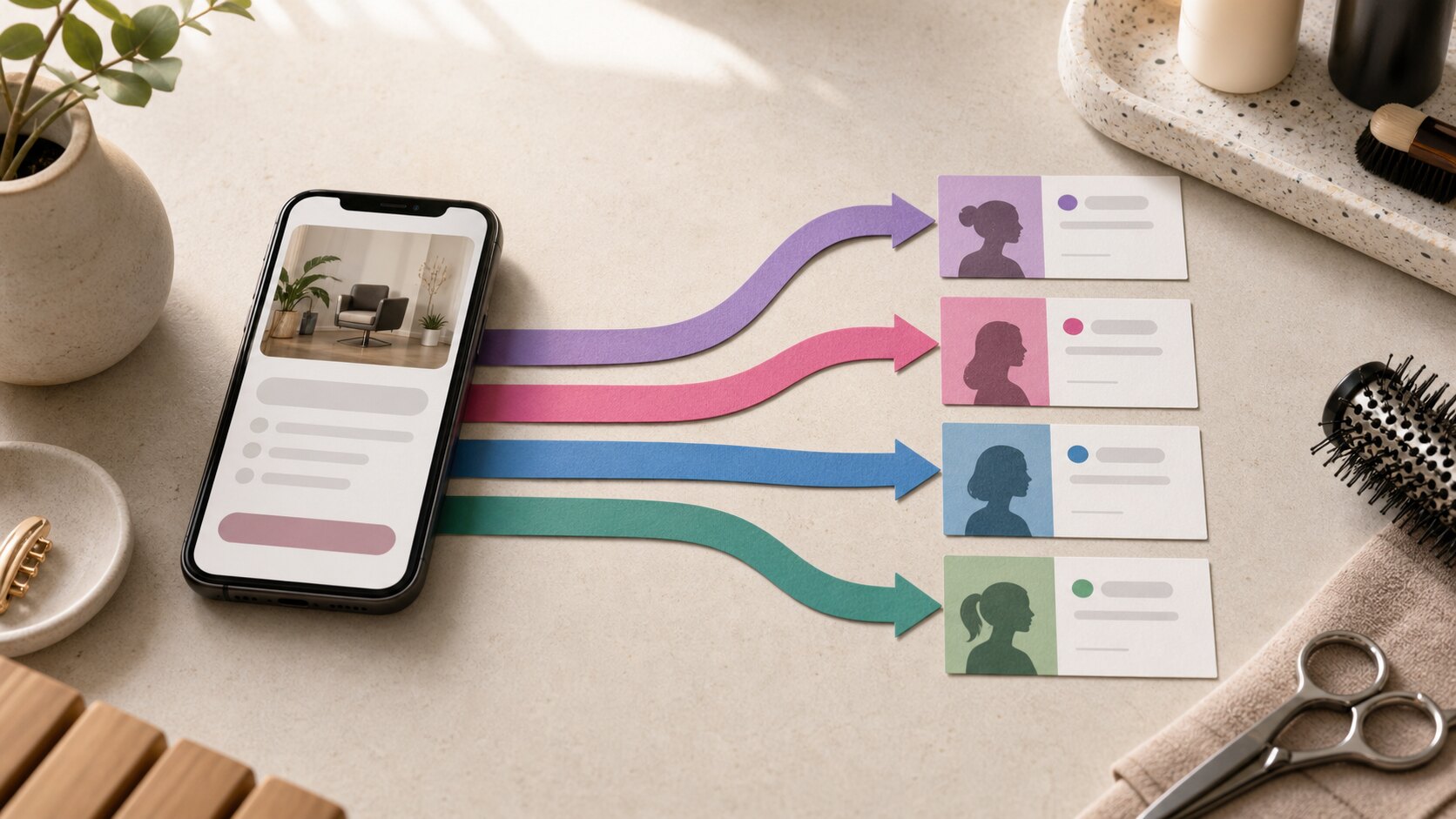
Instagram: know if it brings bookings
See which bookings begin on Instagram, compare your links, and decide where your marketing time and budget should go.
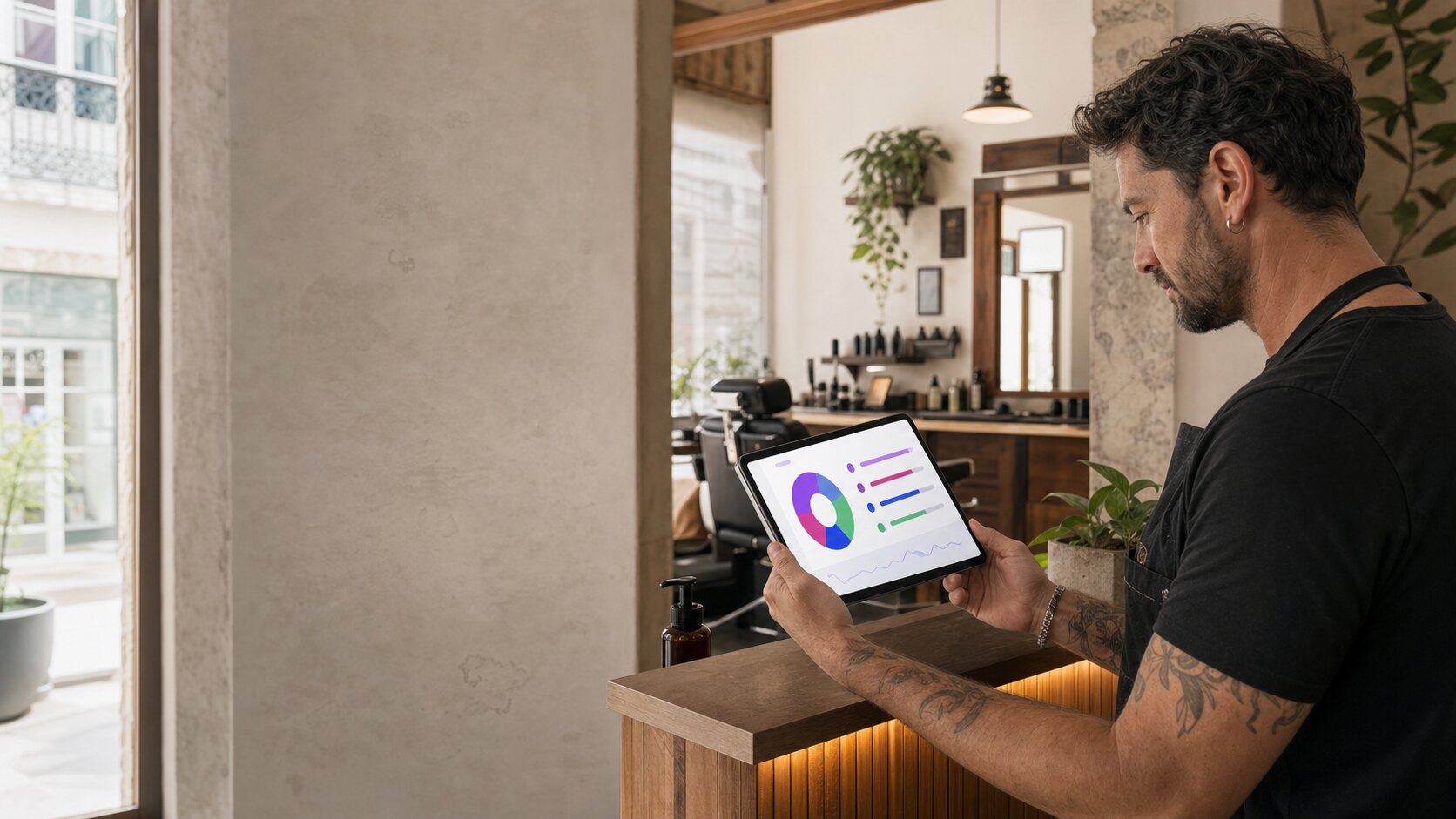
You publish a great haircut, reply to messages, and watch the likes climb. At the end of the month, the useful question is still unanswered: how many bookings came from it?
Without connecting a visit to a reservation, Instagram can look busy while its effect on the business remains unclear. You do not need to ask every customer where they found you. Tag the link before sharing it and let the booking keep the answer.
Likes and clicks are not bookings
Instagram's own metrics tell you whether a post caught attention. Reach, profile visits, and link clicks are useful, but they stop before the business result.
Imagine that two posts receive the same number of clicks. The first attracts curious visitors. The second brings three customers who choose a service and reserve a time. Inside Instagram they may look equal. On your schedule, they are not.
Attribution closes that gap. Instead of measuring only who tapped a link, you can see whether the visit ended in a reservation. That is what lets you judge marketing in terms of the business rather than attention alone.
What a booking source means
The source is the channel attached to the link that brought a customer to your public booking page. It might be Instagram, Google, Facebook, WhatsApp, a newsletter, or somewhere else you shared the page.
A tagged link can also carry more context:
- Source: the channel, such as
instagram. - Medium: how the link was distributed, such as
social. - Campaign: the activity you want to compare, such as
summer_2026. - Content: the exact placement or format, such as
link_in_bioorstory.
You do not need every field on day one. A consistent source and a clear content name are enough to separate the bio link from one sent in a conversation.
Make a dedicated link for your bio
Do not use exactly the same address in every channel. Create a tagged version for your Instagram bio and keep the name stable over time.
Here is an example using a fictional domain:
https://example.com/book?utm_source=instagram&utm_medium=social&utm_content=link_in_bio
Add that address to your profile's link field. If you use a link-in-bio service, tag the button that opens the booking page; otherwise you may only learn that the visit came from the link service.
Create separate versions for Stories, ads, or collaborations. Do not change names halfway through the week: instagram, Instagram, and ig look equivalent to a person, but they become three different values in a report.
A simple rule: use lowercase, avoid spaces, and keep one name per channel. Consistency matters more than a perfect convention.
Read the booking before the overview
When a new reservation arrives, its individual context is the most useful place to start. Check the selected service, time, and source. If the link carried a campaign or content tag, inspect those details too.
That helps answer practical questions:
- Did the colour campaign produce a colour appointment or only a low-cost service?
- Did a last-minute Story fill the gap in tomorrow's schedule?
- Did a staff member's post bring a booking for that person?
- Did the link sent through WhatsApp actually end in a reservation?
After a few days, look at the source overview. The grouped view shows how many public-page reservations came from each channel during the last 30 days. You get the detail needed to act on one booking and the trend needed to choose what to continue.
Compare campaigns by the right result
Do not compare only “Instagram versus Google.” Compare activities you could repeat.
For example, during one month:
| Activity | Tagged content | Result to watch |
|---|---|---|
| Permanent bio link | link_in_bio |
recurring bookings |
| Story with tomorrow's opening | story_opening |
quick gap filling |
| New service post | post_new_service |
demand for that service |
| Local business collaboration | partner_july |
new customers |
Use a window long enough to reflect your normal booking cycle. Someone choosing a psychologist may reserve several days after visiting. A barbershop with same-day availability may see the result much sooner.
Compare quality as well as quantity. Two long-service reservations might matter more to the business than five small appointments. Attribution tells you where they came from; you combine that with service value and customer type.
Decide what to publish next
Data becomes useful when it changes a decision. At the end of each month, choose one activity to keep, one to adjust, and one to stop.
If Stories about open slots produce bookings, turn them into a routine: one clear photo, the available time, and a tagged link. If Reels get reach but no reservations, test a more specific invitation before abandoning them. If a partnership regularly sends customers, repeat it and give that collaboration its own link.
Avoid changing five things at once. Adjust the message, format, or offer while keeping the rest stable. The following month gives you a cleaner comparison.
What attribution cannot prove
A reservation rarely begins with a single interaction. Someone may hear a recommendation, see three posts, and tap the bio link days later. The attributed channel is the last identifiable contact before booking, not a perfect reconstruction of the entire decision.
There are also visits without measurement consent, links copied without their tags, and returning customers who arrive directly. Those reservations may appear as direct or unknown.
That does not make the data useless. It makes it honest. Use attribution as a consistent signal, not absolute proof that one channel did all the work.
How agend.pt shows the source
On agend.pt, reservations made through the public page can keep their marketing source while respecting the customer's consent choice. The source appears compactly on the booking, with campaign and content details available when you need them.
The calendar also provides a summary of where public-page reservations came from over the last 30 days. Instagram, Google, Facebook, and WhatsApp have recognisable icons, so the information stays easy to scan without taking over the schedule.
Attribution is included in every plan, including Free. You do not need to buy an analytics add-on to find out whether your first link is working. To build a stable naming convention across all your channels, read the practical guide to UTM links.
The decision that matters
Instagram does not need to “look good.” It needs to help your business in a way you can recognise. Tag the link, observe the bookings for a few weeks, and make one concrete decision. Once you know which post, Story, or partnership brought a customer, your next piece of content is no longer a guess.